.png)


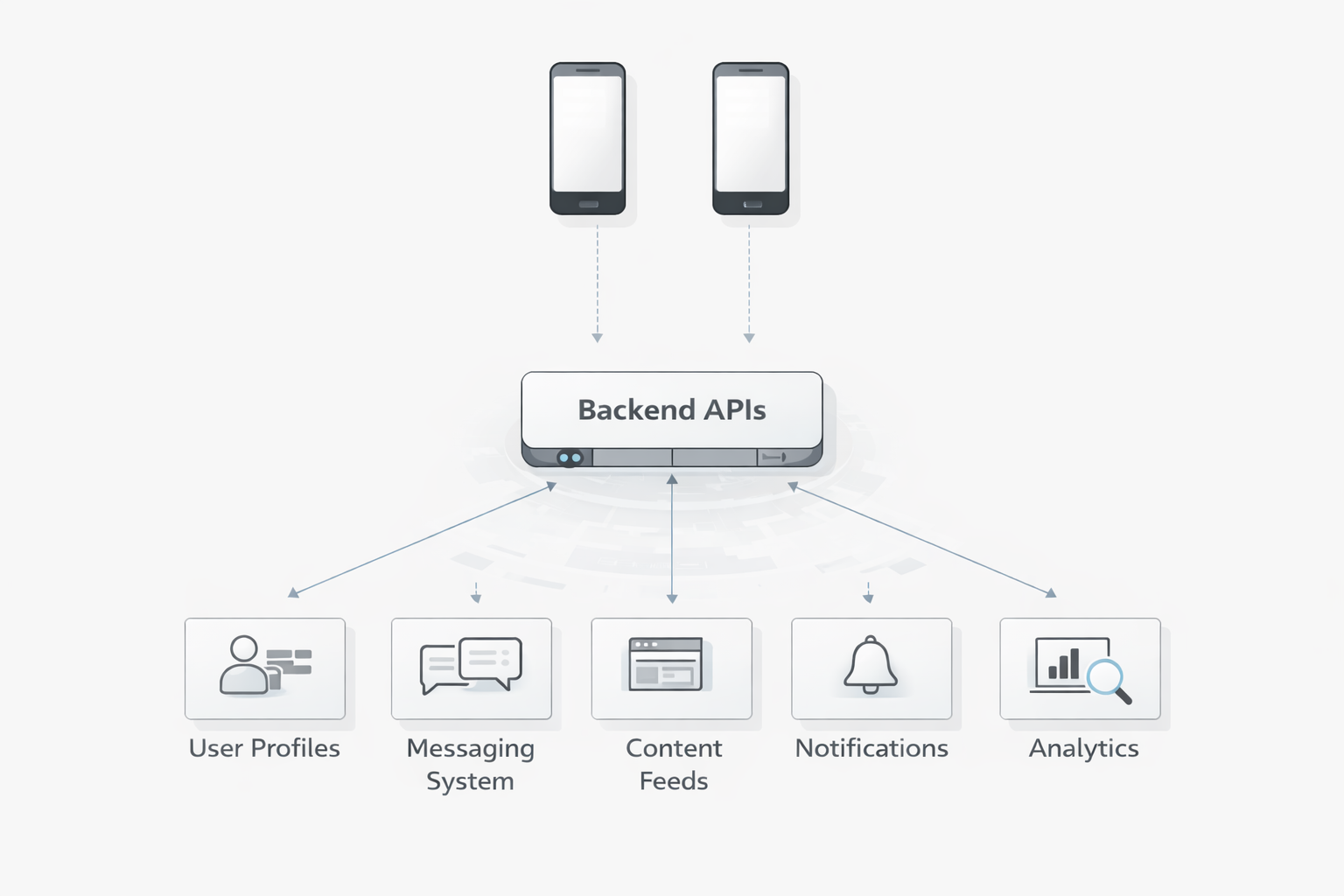
A social networking mobile application experienced rapid growth following early market traction and Series-A funding. The product supported user profiles, messaging, activity feeds, and real-time interactions.
The mobile application had evolved quickly during its MVP phase. While the product gained traction, the underlying architecture had not been designed to support the scale and complexity of a growing user base.
Performance limitations began appearing as user activity increased, and the engineering team struggled to add new features without introducing instability.
The company needed to reinforce the product’s architecture while continuing development.
• Mobile architecture not designed for rapid feature expansion
• Backend APIs with inconsistent response patterns
• Increasing complexity across social interaction features
• State management challenges across user interactions
Verttx reviewed the mobile architecture and its interactions with backend services. Core components were redesigned to support modular development and predictable feature expansion.
Backend APIs were standardized so mobile clients could interact with services consistently. This reduced client-side complexity and improved reliability.
We also simplified state management logic within the mobile application so user interactions across feeds, messaging, and notifications could be handled more predictably.
• Modularized mobile components to support long-term feature expansion
• Standardized backend API structures across services
• Simplified client state management architecture
• Improved performance under concurrent user activity
The mobile application stabilized and product teams were able to accelerate feature development. The system architecture could now support continued expansion as the platform’s user base grew.