.png)


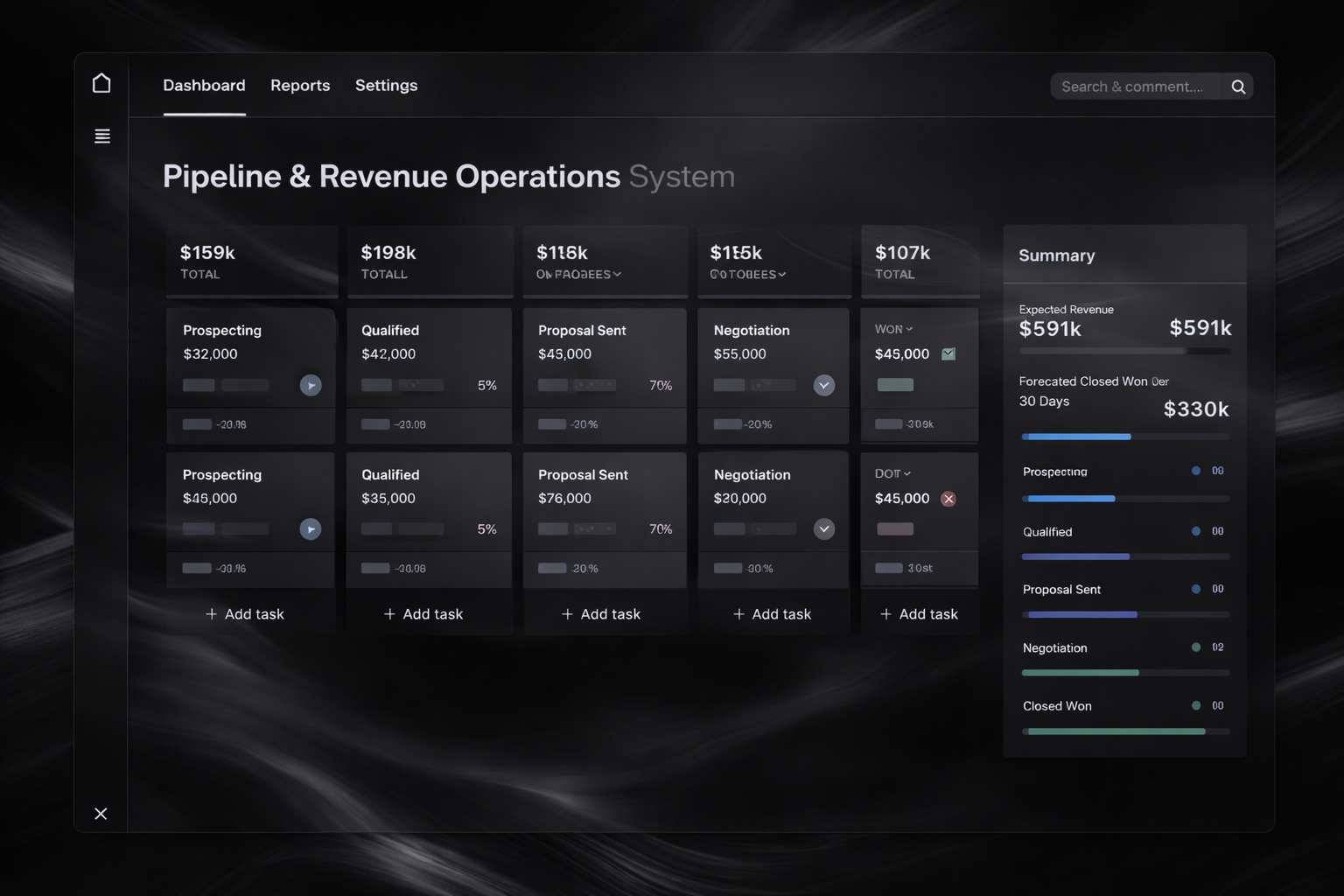
Sales teams often operate across a mix of CRM tools, spreadsheets, and personal workflows. Deal data becomes inconsistent, activity tracking varies by individual, and pipeline reporting depends on manual updates that quickly fall out of sync with reality. Forecasts are produced, but confidence in the numbers is low.
The underlying issue is that generic CRM tools rarely match how a specific sales organization actually sells.
We build a sales operations system that sits alongside existing CRM infrastructure and enforces consistent deal movement, qualification criteria, and follow-up behavior. Instead of replacing tools, the system integrates with them and adds structure where it is missing.
Deal stages are defined based on real sales behavior, not defaults. Required actions and signals are enforced at each stage, ensuring that pipeline data reflects actual progress rather than optimism.
Sales teams spend less time managing tools and more time engaging with prospects. Pipeline data becomes reliable, forecasts improve, and leadership gains a clear understanding of deal health and revenue risk. The system reinforces good sales behavior without adding friction.
Representative example based on common sales and revenue operations patterns.