.png)


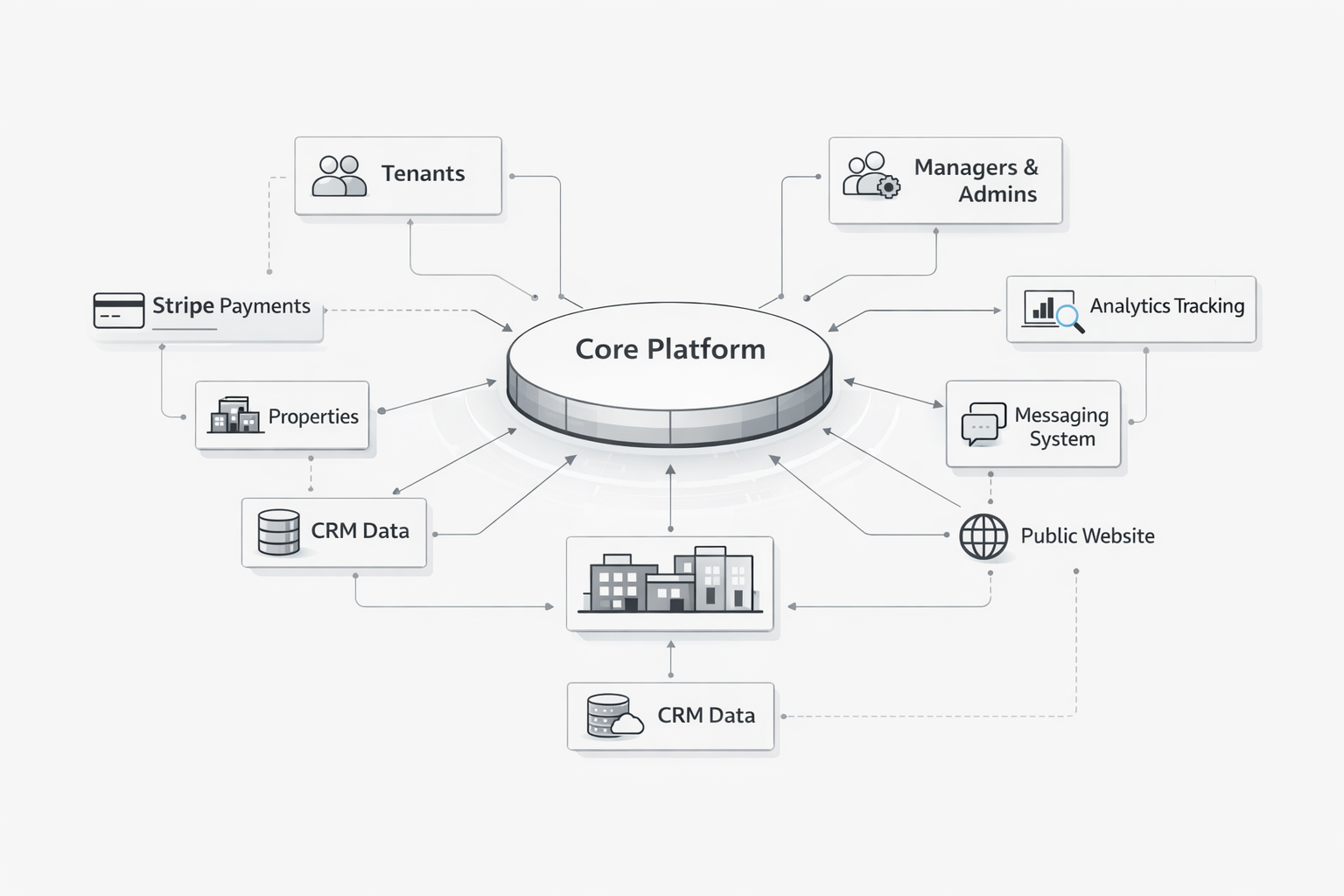
A real estate organization built a property management platform to manage tenants, properties, payments, internal staff operations, and public property listings. The system functioned as a multi-tenant SaaS platform supporting several user roles including tenants, property managers, administrators, and internal operations staff.
Over time the platform expanded to include payment processing, in-app messaging, CRM-style tenant tracking, operational dashboards, and analytics connected to a public-facing website.
The platform had proven its value internally and adoption was growing. As more operational processes moved into the system, architectural decisions made during early development began creating friction.
Data relationships between tenants, properties, and organizations were becoming difficult to maintain. Payment logic was intertwined with application workflows, and messaging and analytics were layered into the system without clear structural boundaries.
The company needed to strengthen the platform architecture before expanding further.
• Multi-tenant architecture supporting multiple organizations
• Role-based access across tenants, managers, and administrators
• Stripe payment processing handling recurring transactions
• Messaging infrastructure connecting tenants and property staff
• CRM-style data management for tenant lifecycle tracking
• Analytics integration across public website and platform activity
Verttx began with a structural assessment of the platform architecture and the relationships between its core data entities. We clarified the boundaries between tenant records, property entities, and organizational ownership so the system could reliably support multiple user roles.
Payment processing was redesigned so billing logic operated independently from tenant and property management workflows. This allowed financial operations to remain stable as the application expanded.
Messaging workflows were stabilized so communication states between tenants and property managers could be tracked consistently across conversations.
Analytics instrumentation was also introduced across critical user interactions so the organization could measure tenant engagement and property activity.
• Defined a clear tenant-property-organization hierarchy within the data model
• Isolated Stripe payment orchestration from application workflows
• Implemented structured role-based permission management
• Introduced analytics tracking across tenant and property activity
• Reduced coupling between public site data and internal platform services
The platform evolved from an expanding internal tool into a stable operational system capable of supporting continued growth. Payment processing reliability improved, analytics visibility increased, and the engineering team was able to introduce new features without destabilizing existing functionality.
Verttx continues to support the system as the platform expands.