.png)


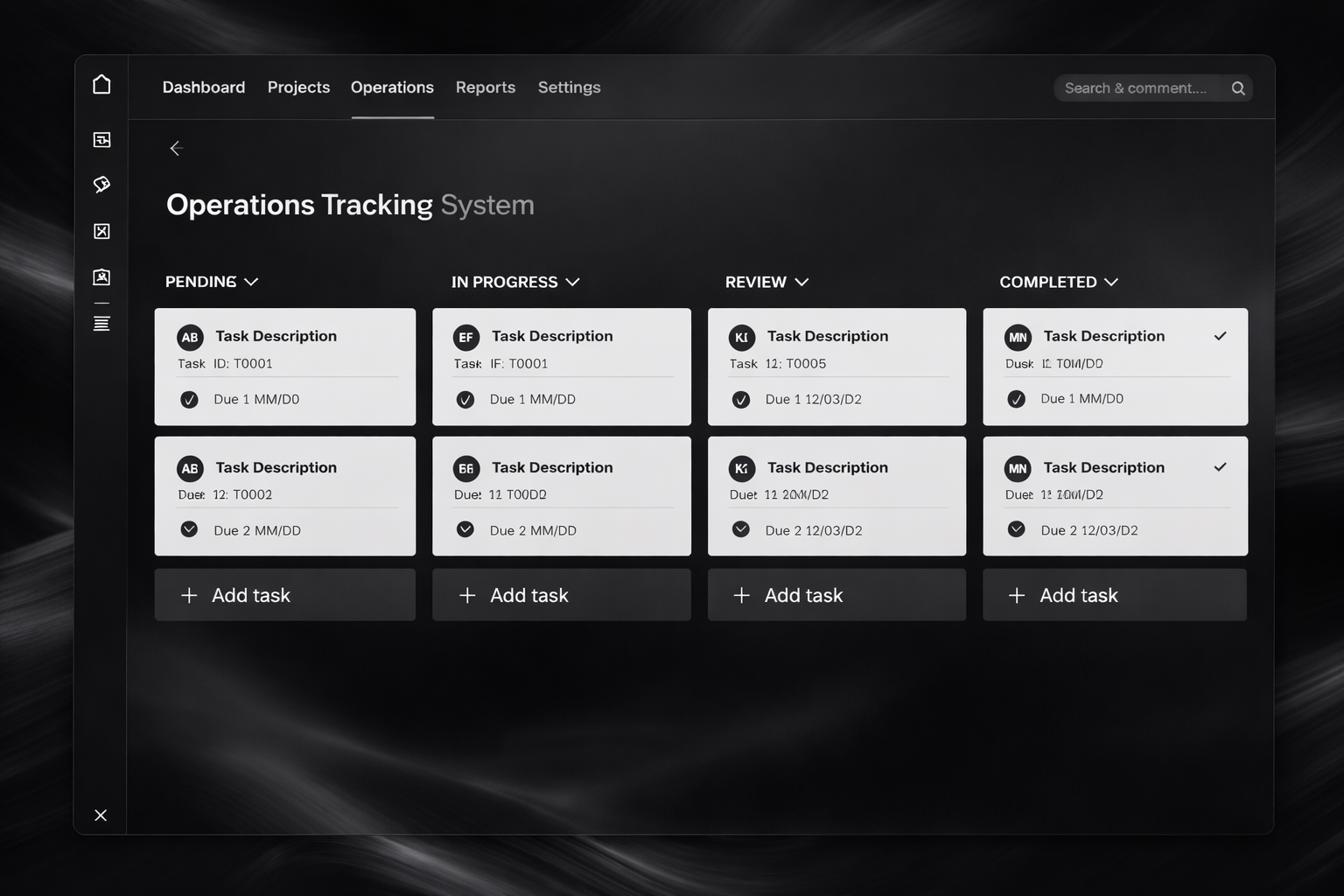
As operational volume grows, teams often rely on spreadsheets to track projects, internal requests, approvals, and deadlines. Over time, these spreadsheets evolve into complex documents with hidden logic, inconsistent updates, and multiple versions in circulation. Ownership becomes unclear, status reporting requires manual follow-ups, and leadership has no reliable real-time view of what is actually happening.
The biggest issue is not the spreadsheet itself, but the lack of enforced structure. Work moves forward based on memory, messages, and informal agreements rather than a shared system.
We design a centralized internal operations system that models the actual flow of work across the organization. Instead of free-form rows and columns, work is represented as structured items that move through clearly defined stages. Each stage has explicit ownership, expectations, and rules for progression.
The system replaces manual updates with automated state changes and ensures that everyone is working from the same source of truth. Managers and operators see different views tailored to their responsibilities, without duplicating data or effort.
Operations become predictable instead of reactive. Teams spend less time clarifying status and more time completing work. Leadership gains continuous visibility into progress, bottlenecks, and capacity, enabling better planning and faster decision-making. Errors caused by miscommunication and outdated information are significantly reduced.