.png)


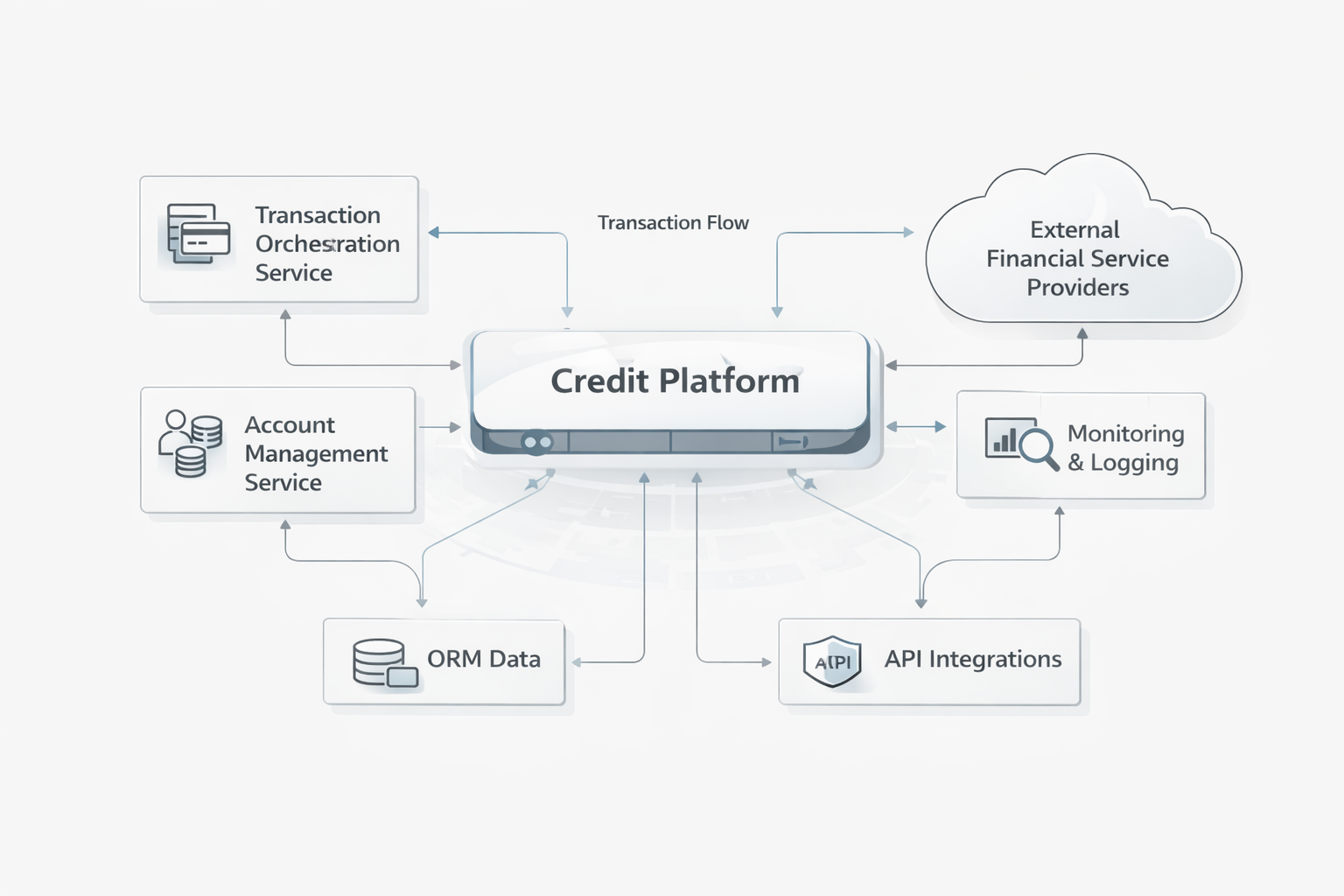
A financial services company developed a digital platform supporting credit card accounts, transaction management, and financial activity tracking. The product had already launched and was processing real financial transactions.
The system relied on multiple integrations with external financial service providers responsible for transaction processing and account verification.
The platform was originally built by an external development team. While the MVP allowed the company to launch, the architecture lacked structural discipline and several critical services had inconsistent implementation patterns.
As transaction volume increased, the system’s reliability became a concern. Integration failures and inconsistent service behavior created operational risk for the platform.
The company needed an engineering partner capable of stabilizing the system while the product continued operating.
• Transaction orchestration across external financial service providers
• Fragile backend services created by multiple prior contractors
• Inconsistent patterns across core system components
• Limited observability into transaction processing behavior
• Minimal documentation of system architecture
Verttx conducted a detailed review of the system architecture, focusing on the transaction processing pipeline and its interactions with external providers.
Critical services responsible for financial transactions were isolated and refactored to reduce the risk of cascading failures across the platform.
Integration layers were redesigned so communication with financial APIs followed predictable contracts with validation and error-handling safeguards.
We also introduced structured logging and monitoring across transaction flows so operational teams could observe system behavior under load.
• Separated financial transaction orchestration from account management services
• Standardized API integration contracts with financial providers
• Introduced structured monitoring and logging across transaction pipelines
• Replaced fragile processing logic with deterministic transaction workflows
The platform achieved significantly greater reliability under live financial usage. Transaction processing became predictable and engineering teams gained the visibility necessary to monitor system behavior.
The company regained confidence in the platform’s ability to support continued growth.